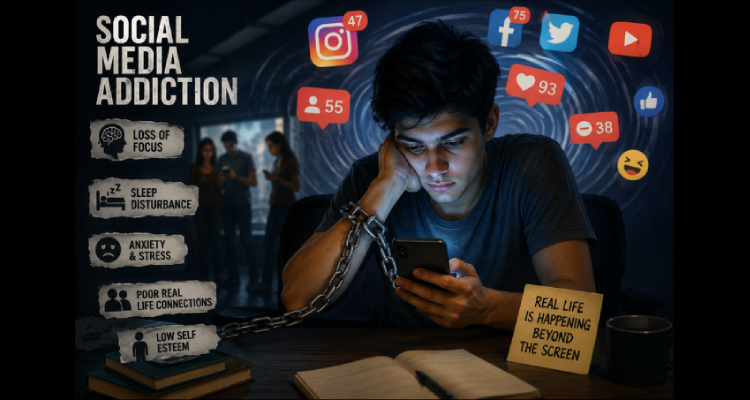
Social media has transformed the way people communicate, learn, shop, work, and share their lives. A quick scroll can reveal breaking news, help us stay in touch with distant friends, or introduce us to new ideas. Yet for many people, what begins as a useful habit gradually becomes something harder to control.
Social media addiction is not simply enjoying online platforms or spending time on a phone. It is the repeated, compulsive use of social media despite negative effects on sleep, focus, relationships, work, or emotional wellbeing. The person may intend to check an app for a few minutes but end up scrolling for an hour, often without feeling satisfied afterward.
Why Social Media Is So Hard to Put Down
Most social platforms are designed to keep attention. Notifications, likes, comments, endless feeds, autoplay videos, and personalized recommendations all encourage users to return. Each interaction can create a small sense of anticipation: perhaps there is a new message, a funny video, or a post that makes us feel noticed.
This cycle is powerful because rewards on social media are unpredictable. A person does not know whether the next refresh will bring something exciting, which makes checking again feel tempting. Over time, the brain begins to associate boredom, loneliness, stress, or even a quiet moment with the urge to open an app.
The Emotional Cost of Constant Comparison
One of the most damaging aspects of excessive social media use is comparison. People usually share highlights: achievements, vacations, celebrations, edited photos, and carefully chosen opinions. Even when users understand that these posts do not show the full picture, it can still be difficult not to compare everyday life with someone else’s curated version of success.
This can lead to feelings of inadequacy, fear of missing out, low self-esteem, and anxiety. Instead of feeling connected, a person may feel excluded from experiences they see online. The more they scroll to escape those feelings, the more likely they are to encounter content that intensifies them.
Signs That Social Media Use May Be Becoming Unhealthy
Social media becomes a concern when it begins to interfere with daily life. Common warning signs include checking apps immediately after waking up, feeling restless without a phone, losing track of time while scrolling, neglecting responsibilities, or using social media to avoid uncomfortable emotions.
Other signs may include disrupted sleep, reduced concentration, frequent comparison with others, and tension in relationships because attention is constantly divided. The issue is not always the number of hours spent online; it is whether the habit is taking more than it gives.
Reclaiming Control Without Rejecting Technology
The goal does not have to be deleting every account or avoiding the internet completely. Social media can be useful when it is used intentionally. The key is to create boundaries that make online activity a choice rather than an automatic response.
Turning off nonessential notifications is a practical first step. Keeping the phone away from the bed can also protect sleep and reduce late-night scrolling. Some people find it helpful to set specific times for checking apps instead of opening them whenever there is a spare moment.
It can also help to replace scrolling with activities that offer real restoration: reading, exercising, cooking, talking to someone face-to-face, spending time outdoors, or working on a hobby. These activities may not provide instant stimulation, but they often leave people feeling more fulfilled.
A Healthier Relationship With Social Media
Social media is neither entirely good nor entirely harmful. Its impact depends largely on how it is used and how much space it occupies in a person’s life. Used with awareness, it can support learning, creativity, community, and communication. Used compulsively, it can quietly drain time, attention, and confidence.
A healthier relationship with social media begins with a simple question: “Am I using this platform because it adds value to my life, or because I do not know what else to do right now?” The answer can reveal whether social media is serving us—or whether we have started serving it.
By setting boundaries, noticing emotional triggers, and making room for offline life, people can enjoy the benefits of social media without allowing it to control their time and wellbeing.