
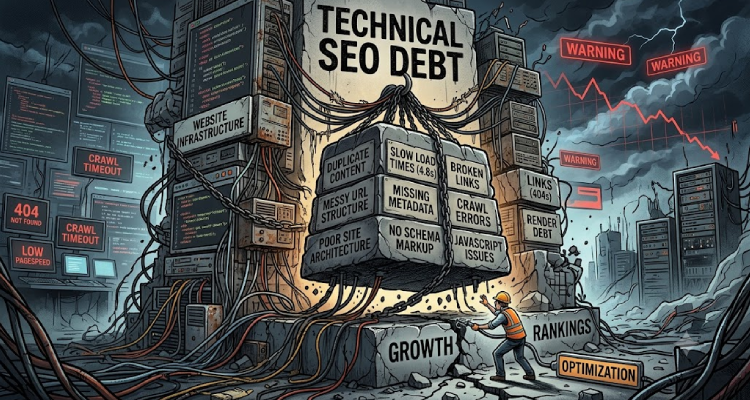
If you’ve ever run a technical SEO audit, you’ve probably been greeted by hundreds—or even thousands—of warnings. Broken links, duplicate metadata, redirect chains, orphan pages, slow-loading assets, and countless other issues can quickly make it feel like your website is in desperate need of repairs.
But here’s the reality: not every technical issue deserves immediate attention.
The most successful SEO teams don’t aim for a perfect audit score. Instead, they focus on fixing the problems that have the biggest impact on search visibility, user experience, and business performance.
What Is Technical SEO Debt?
Technical SEO debt refers to the collection of unresolved website issues that accumulate over time. These issues may result from website redesigns, platform migrations, rushed development cycles, outdated plugins, or simply years of incremental changes.
Like financial debt, technical debt isn’t always bad. Sometimes it’s a conscious trade-off that helps launch products faster. The challenge comes when that debt starts affecting crawlability, indexing, page performance, or conversions.
Not Every Issue Is Critical
Many SEO tools flag every possible warning they can detect, but automated reports don’t understand your business priorities.
For example:
- A broken canonical tag on a high-traffic category page deserves immediate attention.
- A missing meta description on an archived blog post might have little or no measurable impact.
- A redirect chain on a page receiving thousands of visits is more important than one on a forgotten URL.
Context always matters.
Prioritise Based on Business Impact
Instead of working through audit reports line by line, evaluate issues using three questions:
1. Does it prevent search engines from crawling or indexing important pages?
Problems involving robots.txt, noindex tags, canonicalisation errors, server errors, or broken internal linking should usually move to the top of your priority list.
2. Does it affect revenue-driving pages?
Focus first on pages that generate leads, sales, or significant organic traffic. Improvements here often deliver the fastest return on investment.
3. How difficult is the fix?
Sometimes a simple change can resolve hundreds of issues across an entire website. Other times, a complex development project may only produce marginal gains.
Balancing impact against implementation effort helps teams use development resources more effectively.
Create a Practical Prioritisation Framework
A simple scoring system can help:
High Priority
- Indexing errors
- Crawl issues
- Broken internal links
- Critical Core Web Vitals problems
- Incorrect canonical tags
Medium Priority
- Duplicate title tags
- Missing image alt text
- Redirect chains
- Large image optimisation
Low Priority
- Minor HTML validation issues
- Slight metadata inconsistencies
- Legacy pages with little traffic
- Cosmetic warnings from SEO tools
Track Progress Instead of Chasing Perfection
Technical SEO is an ongoing process rather than a one-time project.
Regular monitoring, scheduled audits, and collaboration between SEO specialists, developers, and content teams help prevent technical debt from becoming overwhelming.
The goal isn’t to eliminate every warning. It’s to ensure technical issues don’t block growth opportunities.
Final Thoughts
A clean technical foundation is important, but perfection isn’t the objective. Smart SEO teams focus on the issues that directly influence crawling, indexing, rankings, user experience, and revenue.
By prioritising fixes based on business value instead of audit scores, you can spend less time chasing low-impact warnings and more time making improvements that genuinely move the needle.


